For over a century, the global medical strategy for managing diabetes has centered on a single fundamental mechanism: delivering or enhancing hormones to push excess sugar out of the bloodstream and into cells. While life-saving, this approach often leaves a major metabolic paradox unresolved. Forcing glucose into saturated tissues does not eliminate the surplus caloric energy—it often ends up stored as adipose tissue, driving the vicious cycle of type 2 diabetes and obesity, clinically recognized as “diabesity”.
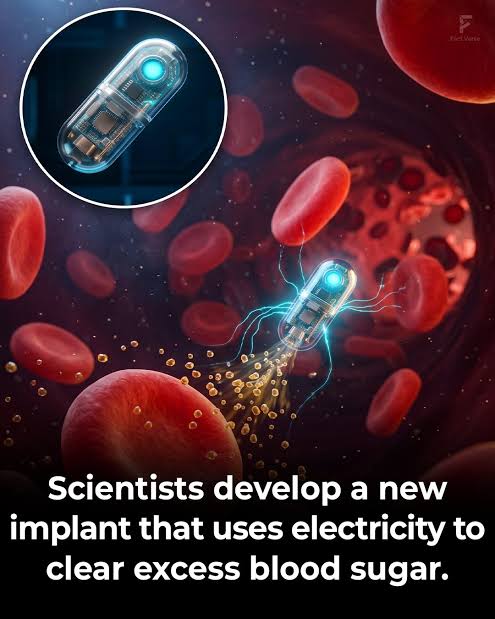
Now, bioengineers at ETH Zurich in Switzerland have unveiled a paradigm-shifting alternative. Led by Professor Martin Fussenegger and his team, the researchers designed an experimental, wireless bioelectronic implant known as ECHO (Electrochemical Closed-Loop Homeostasis Orchestrator). Rather than relying on pharmaceuticals, insulin injections, or living cell cultures, ECHO uses electrical current and an inorganic catalyst to chemically transform surplus circulating glucose into gluconate—a harmless byproduct that the kidneys can naturally flush out via urine.
Published in the journal Science, the breakthrough represents a completely cell-free, drug-free frontier in metabolic intervention, capable of simultaneously steadying glycemic spikes and promoting significant weight loss in animal models.
The Metabolic Trap of Conventional Therapies
To appreciate the innovation behind ECHO, one must first examine the metabolic bottleneck of conventional diabetes management. In healthy physiology, the pancreas releases insulin in response to elevated blood glucose, signaling muscles, the liver, and fat cells to absorb the sugar for immediate energy or glycogen storage.
In type 2 diabetes, cells become resistant to insulin. In response, standard therapeutic regimens often involve insulin secretagogues, daily insulin shots, or medications that sensitize receptors. While these interventions prevent acute hyperosmolar crises and glucose toxicity, they frequently redirect unused carbohydrates directly into lipid synthesis. Patients frequently struggle with unintended weight gain, worsening systemic insulin resistance, and increasing long-term cardiovascular risks.
Newer pharmacological classes, such as GLP-1 and GIP receptor agonists, have revolutionized obesity and diabetes management by suppressing appetite and slowing gastric emptying. Yet, they come with challenges: gastrointestinal side effects, the necessity of indefinite administration, high financial burdens, and rapid weight rebound upon cessation.
The ETH Zurich team posed an engineering question: What if, instead of forcing the body to absorb or store excess fuel, a device could safely vent that caloric overflow out of the body altogether?
How ECHO Works: Electrocatalysis in the Bloodstream
The ECHO system is a miniature, subcutaneously implantable bioelectronic device encased in a biocompatible 3D-printed housing. At its core lies an advanced electrochemical reactor that bypasses biology entirely.
1. The “Desert Rose” Catalyst
Inside the device, researchers embedded a proprietary catalyst composed of graphite felt integrated with gold nanoclusters and decorated with ultra-fine platinum nanoparticles. Under an electron microscope, these microscopic clusters form delicate, spherical crystalline arrangements reminiscent of mineral “desert roses”. This morphology maximizes the surface area available to interact with surrounding interstitial fluid and blood.
2. Selective Glucose Oxidation
When a low-voltage electrical current passes through the catalyst, it triggers an electrochemical oxidation reaction. The device selectively strips electrons from excess glucose molecules (C_6H_{12}O_6), converting them into gluconic acid, which naturally dissociates into gluconate (C_6H_{11}O_7^−).
Gluconate is a benign, non-toxic organic acid anion frequently found in small quantities in common foods, fruits, and wine, and is regularly used in pharmaceuticals and mineral supplements. Crucially, human renal transport mechanisms do not reabsorb gluconate with the high affinity reserved for glucose. Once formed, gluconate passes effortlessly through the glomeruli into the renal tubules and is excreted through urination, permanently clearing the calories from the body without requiring muscular exertion or cellular absorption.
3. Wireless Power and Closed-Loop Control
Implanting batteries inside patients presents chronic risks of chemical leakage, bulkiness, and replacement surgeries. To circumvent this, ECHO is completely battery-free. It receives electrical energy wirelessly via resonant inductive coupling at 13.56 MHz—an internationally standardized Industrial, Scientific, and Medical (ISM) radio frequency widely used in certified biomedical hardware.
Furthermore, the system can operate as an autonomous, closed-loop circuit. When paired with a continuous glucose monitor (CGM) and an external microcontroller or smartphone interface, the system continuously tracks glycemic levels. The moment interstitial sugar crosses a predetermined hyper-glycemic threshold, the transmitter activates the internal catalyst. As blood sugar stabilizes within the target physiological range, power transmission stops, preventing over-conversion and safeguarding the subject against life-threatening hypoglycemia.
Laboratory Findings: Glycemic Control Meets Natural Fat Burning
In preclinical trials evaluating mice exhibiting diet-induced diabesity, the performance of the ECHO implant proved striking.
During an autonomous closed-loop protocol spanning 12 continuous days, the implant dynamically maintained normal blood sugar levels following meal-induced glucose surges without a single dose of insulin or oral medication. In a separate chronic-exposure study running over six weeks—where the implant was scheduled to operate for just 60 minutes each day—fasting glucose remained tightly regulated.
Remarkably, the metabolic benefits extended far beyond sugar readings:
- Substantial Weight Loss: Diabetic mice treated with scheduled electrocatalysis lost up to 10% of their total body weight over six weeks.
- Preserved Food Intake: Crucially, metabolic cage analysis confirmed that the animals did not lose weight due to appetite suppression, nausea, or decreased caloric consumption; food intake remained identical to control cohorts.
- Shift to Lipid Utilization: Blood profiling revealed significantly lowered triglycerides, elevated free fatty acids, and increased circulating ketones. By disposing of surplus circulating carbohydrates before they could be packed into adipocytes, the implant altered the body’s energy balance, forcing the liver and peripheral tissues to tap into existing fat reserves for systemic fuel.
Once the electrical stimulation was turned off, blood glucose levels returned to their elevated baseline, confirming that the implant acts as a precise, active governor rather than inducing an uncontrolled systemic mutation.
Overcoming the Biocompatibility Hurdle
Earlier ventures into bioelectronic diabetes treatments often explored encapsulated cellular factories—living human or animal beta cells engineered to secrete insulin upon optogenetic or electrical cues. While conceptually elegant, living cell therapies face persistent hurdles: finite cell lifespans, cellular hypoxia within dense implants, and the perpetual danger of an aggressive immune response triggering fibrous encapsulation or cell rejection.
ECHO sidesteps these biological vulnerabilities by employing an entirely abiotic, cell-free architecture. The gold-and-platinum inorganic nanomaterials are mechanically durable, sterilizable, and immune to biological senescence. Because the device does not synthesize or store a potent hormone like concentrated insulin, the structural risk of accidental “hormone dumping”—a mechanical rupture releasing a lethal dose of insulin all at once—is eliminated.
The Road to Human Clinical Application
Despite the extraordinary results in rodents, the researchers at ETH Zurich emphasize that substantial development lies ahead before ECHO reaches human clinical trials.
Scaling from a mouse model to human physiology requires handling vastly larger volumes of circulating glucose. Key questions remain regarding long-term biofouling: over months and years, will circulating blood proteins or tissue fibrosis coat the platinum-decorated gold platelets, gradually blunting catalytic efficiency? Researchers must also monitor long-term renal health to ensure that handling sustained loads of excreted gluconate does not cause microvascular strain or alter electrolyte and mineral reabsorption dynamics in human kidneys.
Nevertheless, the validation of ECHO proves that electricity can directly drive therapeutic biochemistry inside a living organism. By transforming excess blood sugar into a disposable byproduct, this wireless implant offers a glimpse into a future where chronic metabolic disorders are managed not by endless pharmacology, but through the seamless integration of chemistry, materials science, and bioelectronic precision.
About The Author