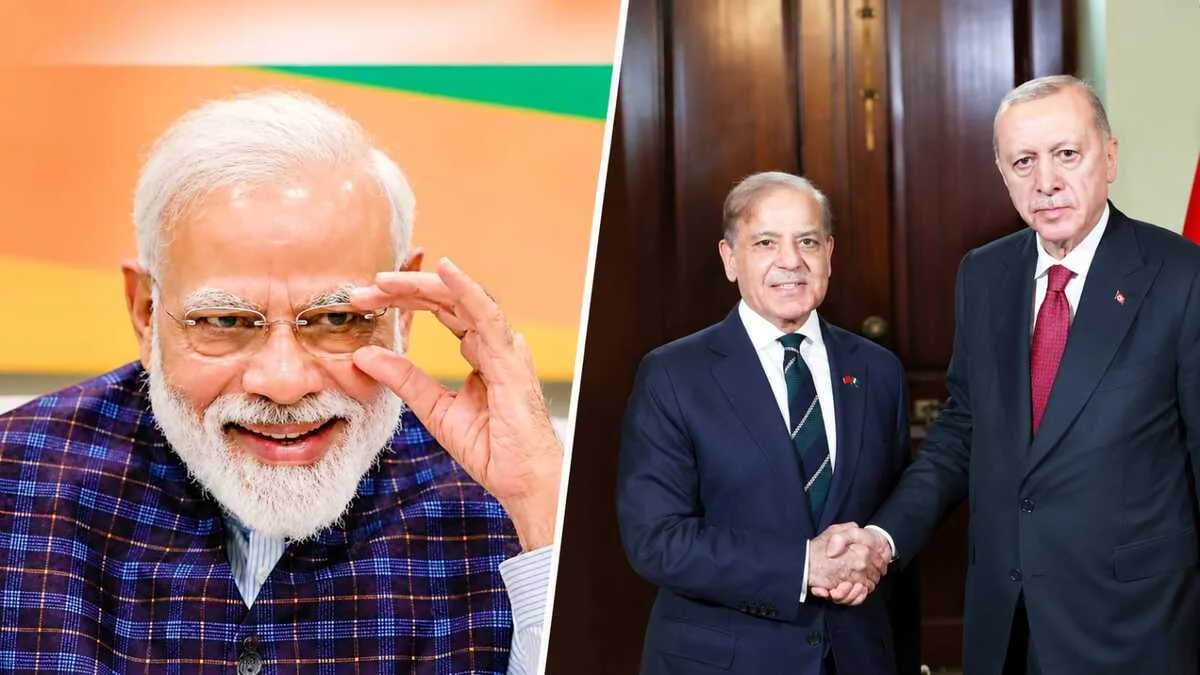
When foreign policy debates erupt in the Grand National Assembly of Turkey (TBMM), they typically centre around the immediate, turbulent periphery: Syria, the Aegean, the Eastern Mediterranean, or relations with NATO and the European Union. Recently, however, the parliamentary chamber in Ankara echoed with an unexpected and geographically distant question that cut straight to the core of Turkish national interest: Why sign an unwanted defence agreement with Pakistan that could potentially drag Turkey into an India-Pakistan war? India is not our enemy.
The debate, ignited by opposition lawmakers during deliberations over expanding bilateral and multilateral defence arrangements, exposed a growing fracture in Turkish foreign policy thinking. On one side stands President Recep Tayyip Erdoğan’s administration, eager to project influence across the Islamic world, build non-Western military pacts, and monetize Turkey’s expanding indigenous defence-industrial complex. On the other side stands an increasingly vocal faction of parliamentarians who fear that ideological brotherhood is blinding Ankara to realpolitik—risking confrontation with a rising global power, India, with whom Turkey has no direct territorial, security, or existential disputes.
The Spark in the Assembly: Questioning Ankara’s Commitments
The friction flared as lawmakers examined mutual defence obligations, intelligence sharing, and military assistance protocols involving Islamabad. While Turkey and Pakistan have cultivated warm diplomatic ties dating back decades—often celebrated through cultural ties and shared political rhetoric—opposition parliamentarians voiced alarm over clauses that resemble mutual defence guarantees.
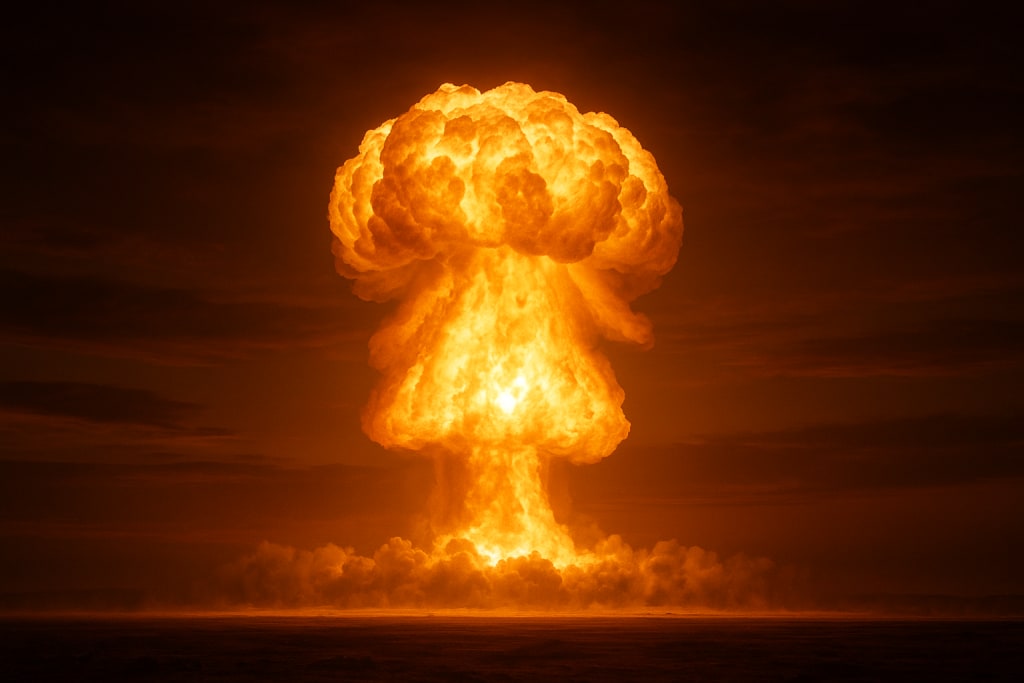
Lawmakers pointedly asked why the Turkish Republic would entangle itself in the intractable, nuclear-shadowed feud of South Asia. “India and Pakistan are constantly fighting, and both possess nuclear weapons,” one lawmaker remarked during the parliamentary floor debate. “If India attacks Pakistan tomorrow, will that be considered an attack against us as well? Will we enter a war on Pakistan’s side?”
The central criticism focused on strategic asymmetry. Turkey, already maintaining the second-largest standing military in NATO, possesses vital commercial, diplomatic, and geopolitical interests that span Europe, Central Asia, and the Global South. Entangling those capabilities in an open-ended mutual assistance framework with Pakistan—a nation locked in perpetual confrontation along its eastern border—strikes opposition critics as an uncalculated hazard. As dissenting MPs argued, signing defence protocols that hint at collective security in South Asia risks turning Ankara into a proxy combatant in a regional theater where it possesses no vital interests.
“India Is Not Our Enemy”: The Economic and Geopolitical Reality
The assertion that India is not our enemy represents more than just a momentary rhetorical pushback; it reflects hard macroeconomic and diplomatic facts.
India represents the world’s most populous country, the fifth-largest economy, and a pivotal anchor of the Indo-Pacific architecture. Over the last decade, bilateral trade between New Delhi and Ankara has fluctuated, occasionally dampened by Ankara’s diplomatic rhetoric on the Kashmir dispute at the United Nations General Assembly. Yet Indian markets represent a massive export destination for Turkish goods, chemicals, machinery, and agricultural products.
Turkish parliamentarians scrutinizing the government pointed out that alienating New Delhi carries severe, tangible costs:
- Commercial Retaliation: Past diplomatic friction has prompted Indian consumers and industry groups to quietly reconsider Turkish imports, while Indian tourists and destination weddings—lucrative sources of foreign exchange for Istanbul and Antalya—have shown sensitivity to bilateral tensions. Deepening military commitments with Pakistan risks institutionalizing an adversarial relationship with India.
- Geopolitical Blowback in the Eastern Mediterranean: Hostility toward India has directly incentivized New Delhi to deepen strategic and defence ties with Turkey’s immediate regional rivals—namely Greece, Cyprus, and Armenia. By alienating India, Ankara has inadvertently pushed New Delhi into high-level defence partnerships with Athens, including joint military drills, strategic air exercises, and diplomatic convergence against unilateral moves in the Mediterranean. Lawmakers warned that unnecessarily antagonizing India has made Turkey’s own backyard less secure.
- Diplomatic Isolation: India’s key role in the BRICS bloc, the G20, and the Shanghai Cooperation Organisation means Ankara needs working channels with New Delhi if Turkey hopes to position itself as a cross-continental bridge.
The Government’s Defense: Industrial Imperatives and Strategic Depth
In response to the opposition’s fierce interrogations, government spokespeople and parliamentary foreign affairs leaders offered a different rationale. The ruling coalition maintained that Turkey’s defence agreements are strictly defensive, designed to protect national sovereignty, and structured within the boundaries of Turkish constitutional law. Under Article 92 of the Turkish Constitution, deploying troops abroad or permitting foreign forces on Turkish soil still requires explicit parliamentary authorization, meaning automatic military involvement remains legally impossible.
Beyond constitutional safeguards, the administration’s drive to sign bilateral defence agreements rests on three pillars:
- Expanding the Indigenous Arms Market: Turkey’s domestic defence sector—led by Baykar, TAI, Aselsan, and STM—has become an economic and prestige engine. Pakistan has been one of the largest buyers of Turkish military hardware, procuring MILGEM-class corvettes, modern unmanned aerial vehicles (UAVs), and avionics upgrades. Ankara views defence agreements as necessary frameworks to secure multi-billion-dollar defence export contracts.
- Technological Co-development: Facing Western embargoes and export restrictions, Turkish planners see strategic utility in joint aerospace and missile development with partner nations willing to share technical footprints without political strings attached.
- Ideological Leadership: Under the current administration, Turkish foreign policy has sought to champion broader Islamic causes and project soft and hard power well beyond the Ottoman successor space. Supporting Islamabad aligns with this ideological narrative, even when it complicates relations with non-aligned powers.
The Peril of Automatic Entanglement
Despite the government’s assurances that troop deployments require parliamentary consent, critics insist the danger lies in political and material momentum. Even without boots on the ground, a formal defence pact creates immense structural pressure during a crisis.
If armed hostilities were to break out along the Line of Control or escalate into a broader India-Pakistan conflict, Pakistan would immediately invoke its security agreements, seeking Turkish munitions, drone resupply, intelligence data, and diplomatic cover. Supplying advanced Turkish weapon systems to a combatant actively striking Indian targets would, in the eyes of New Delhi and international law, make Turkey an active party to the conflict.
Furthermore, lawmakers criticized long-term commitment clauses in recent pacts that restrict a nation’s ability to unilaterally withdraw during initial operational windows. In an era of volatile multi-polarity, locking Turkish security policy into a decade-long framework with an unstable partner deprives Ankara of strategic agility.
The Need for Strategic Realism
The debate currently unfolding in Ankara signals a maturing foreign policy consciousness within Turkey. While ideological solidarity and defence export sales offer short-term headlines and commercial revenue, they cannot replace coherent national strategy.
India has never threatened Turkey’s territorial integrity, its sea lanes, or its sovereignty. To risk alienating a nuclear-armed economic giant of 1.4 billion people for the sake of vague collective defence rhetoric is, as Turkish parliamentarians rightly warned, a classic example of foreign policy overreach.
As the Turkish Grand National Assembly continues to debate Ankara’s global footprint, the message from the opposition benches carries profound weight: Turkey’s military alliances should deter threats to the homeland, not drag the nation’s youth and reputation into someone else’s generational war. Balancing ties with Islamabad while maintaining respectful, pragmatic engagement with New Delhi is not just desirable for Turkey—it is a strategic necessity.
About The Author