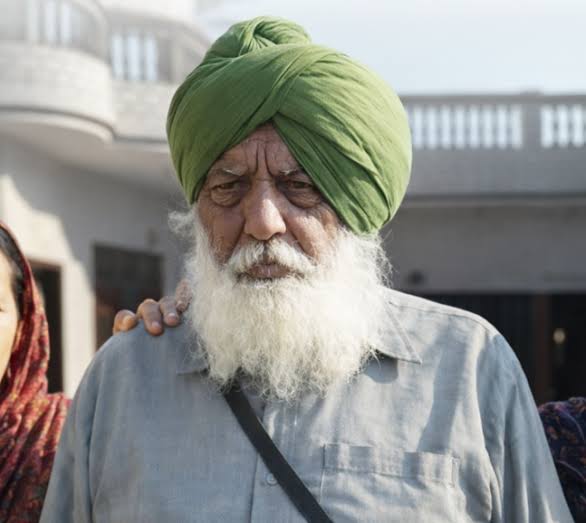
When Kashmir Singh walked across the Wagah-Attari border into India on March 4, 2008, history witnessed an occurrence that seemed torn from the pages of tragic folklore. It was not merely the homecoming of an elderly, frail prisoner; it was the re-emergence of a human being from a living, steel-and-stone time capsule sealed in 1973. Thirty-five years of solitude, darkness, and torture had stolen his youth, wiped his prime from existence, and reduced the prime of his life to a continuous battle for psychological survival. Decades after his arrest, the saga of Kashmir Singh has surged back into public consciousness and social media discourse, prompting heartfelt tributes from intelligence veterans, security officials, and former Jammu and Kashmir Director General of Police Shesh Paul Vaid. It serves as an unvarnished testament to the immense, silent sacrifices demanded of those who work in the shadowy corridors of espionage.
A Plunge into the Shadows
Born in Punjab, Kashmir Singh served in the Indian Army from 1962 to 1966 before transitioning into private life. Yet, duty and economic hardship eventually intersected, leading him down a covert path. In the early 1970s, during a turbulent geopolitical era following the 1971 Indo-Pak war, Singh was recruited into India’s clandestine intelligence apparatus.
Operating under deep cover, he crossed the international border under the alias of Mohammad Aslam. For months, he navigated hostile terrain, blending into Pakistani society, collecting crucial strategic intelligence, and shuttling sensitive data back across the border. In the world of espionage, an operative walks a razor’s edge where a single misstep guarantees doom. For Kashmir Singh, that moment arrived in 1973 along the Rawalpindi-Peshawar road. Intercepted by Pakistani counterintelligence operatives, his cover was blown. He was arrested, stripped of his identity, and plunged into the dark labyrinth of Pakistan’s military interrogation centers.
The Decades of Darkness
Following his capture, Singh was subjected to brutal third-degree interrogation techniques designed to break his resolve, extract tactical codes, and unravel Indian intelligence networks. Despite months of sustained interrogation, he held his silence on operational secrets. In 1977, a Pakistani military court tried him for espionage and handed down a sentence of death.
What followed was a slow-motion execution that lasted over three decades. Transferred between notorious facilities—including Kot Lakhpat Jail in Lahore, Rawalpindi, Bahawalpur, and Mianwali—Singh spent roughly 17 continuous years in solitary confinement. For much of that time, he was chained, kept in dimly lit, damp cells barely large enough to lie down in. In these squalid quarters, seasonal extremes turned concrete cells into freezing iceboxes in winter and suffocating furnaces in summer.
He was denied visitors, letters, reading materials, and medical care. The outside world moved forward: wars began and ended, governments fell, technology reshaped human civilization, and generations grew old. Inside his cell, time was measured only by the changing angles of faint daylight slipping through high ventilation slits and the clinking of guards’ iron keys. He lived on death row with the hanging noose forever dangling above his neck, never knowing if dawn would bring his execution. To maintain his sanity, Singh turned inward, relying on prayer, memory, and sheer mental grit to keep despair from claiming his mind.
The Forgotten Family
While Kashmir Singh endured the physical brutality of Pakistani prisons, an equally devastating tragedy played out across the border in his native village of Nangal, Punjab. His wife, Paramjit Kaur, was left to fend for herself and their three young children. When Singh failed to return in 1973, official channels went silent. Operating in the shadows meant the state could not officially acknowledge his mission or his capture.
For 35 years, Paramjit Kaur lived in suspended agony. Without a death certificate or definitive proof of life, she refused to accept the status of a widow. She rejected traditional mourning, holding steadfast to the intuitive belief that her husband was alive somewhere across the border. Raising her children amid severe financial destitution and social isolation, she worked relentlessly to keep the family afloat. Years turned into decades, her hair grayed, and her children grew into adulthood without ever remembering the touch of their father’s hand.
An Unlikely Deliverance
Kashmir Singh’s eventual release arrived through an extraordinary diplomatic intervention. In early 2008, human rights activist and Pakistan’s then-Federal Minister for Human Rights, Ansar Burney, undertook an inspection of Kot Lakhpat Jail. While walking through the high-security blocks, Burney encountered an old man with a long, unkempt white beard and hollow eyes, clad in faded clothes and locked behind bars.
When Burney reviewed the inmate’s records, he was shocked to discover that Kashmir Singh had spent 35 years in prison without formal confirmation of his execution order, enduring incarceration longer than two consecutive life sentences. Recognizing the profound human tragedy, Burney took up Singh’s case directly with the President of Pakistan, Pervez Musharraf. Appealing purely on humanitarian and clemency grounds, Burney argued that keeping an elderly, broken man in prison served no purpose. President Musharraf signed the clemency petition, remitting his death sentence and ordering his immediate repatriation to India.
Emerging from the Time Capsule
On March 4, 2008, the heavy gates at the Wagah-Attari border swung open. An emaciated, 67-year-old Kashmir Singh stepped onto Indian soil. The scenes that followed were raw and overwhelming. Falling to his knees, he kissed the ground before collapsing into the arms of his wife, Paramjit Kaur, who had waited nearly half a century for that exact moment.
The world Singh returned to was unrecognizable. When he had left in 1973, color television was rare, mobile phones and the internet did not exist, and the geopolitical landscape was defined by the Cold War. Stepping out in 2008 was akin to emerging from a science-fiction time vault. He struggled initially to grasp the concept of cellular phones, the vast urban sprawl of modern Indian cities, and the digital era that had replaced the world he once walked.
Shortly after his return, Singh made a rare, candid public admission that he had indeed served as a spy for India, stating that he had faithfully carried out the duties assigned to him and bore no bitterness toward anyone for doing his duty.
A Legacy of Silent Patriotism
Kashmir Singh’s story continues to resonate deeply because it captures the visceral, unglamorous reality of espionage. Popular culture often romanticizes intelligence work with images of high-stakes action and thrilling escapes. The reality, as illustrated by Kashmir Singh’s life, is far more grueling: an unacknowledged soldier operating without a uniform, facing decades of torture, legal oblivion, and the quiet erasure of an entire lifetime.
As veteran officials like former DGP Shesh Paul Vaid revisit his sacrifice, Kashmir Singh stands as an enduring symbol of iron resolve. His survival through 35 years of unyielding confinement remains one of the most astonishing chapters of human endurance in South Asian history—a reminder of the immense, unseen debts owed to the silent sentinels who sacrifice their lives in the shadows so that others may live in peace.
About The Author