When the diplomatic cable from the Quai d’Orsay arrived, signaling that France was suspending all development aid and budgetary assistance to Burkina Faso, the diplomatic establishment expected the customary choreography. For decades, the script between Paris and its former colonies followed a predictable cadence: a suspension of funds, followed by quiet panic in the African capital, an emergency diplomatic delegation sent to Europe, polite concessions behind closed doors, and the inevitable restoration of the financial pipeline.
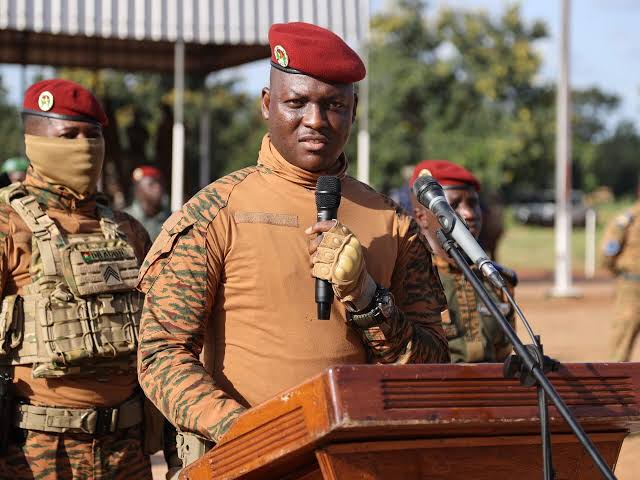
Captain Ibrahim Traoré tore up the script.
He did not call Paris. He did not send an envoy to plead Burkina Faso’s case. He did not issue a desperate appeal to international donors to bridge the sudden budgetary gap. Instead, the young military leader took to the airwaves, faced his people, and articulated the fundamental paradox of post-colonial dependency:
“We have been receiving French aid for 63 years, yet our country has not developed. Cutting it off now will not kill us—it will motivate us to work and rely on ourselves.”
In that single statement, Traoré captured a tectonic shift sweeping across the Sahel. The suspension of aid, conceived in European chancelleries as a punitive lever to enforce compliance, was received in Ouagadougou not as a sanction, but as an eviction notice from an illusion.
The Architecture of the “Aid Trap”
To understand why Ouagadougou did not blink, one must examine what sixty-three years of official development assistance (ODA) had actually accomplished. Burkina Faso had been locked into the standard structural adjustment model since independence in 1960. Millions of euros flowed annually through development agencies, non-governmental organizations, and targeted budgetary line items.
Yet beneath the glossy brochures of development banks lay a stark reality:
- Consumption Over Production: Aid was overwhelmingly earmarked for technical assistance, administrative overhead, and short-term humanitarian relief rather than sovereign industrial infrastructure, mechanized agriculture, or domestic processing of raw commodities.
- The Revolving Door: A substantial percentage of French development assistance never truly left the European ecosystem. It paid for foreign consultants, European equipment, and institutional oversight, functioning as an indirect subsidy to external service providers while doing little to cultivate indigenous expertise.
- Structural Vulnerability: Relying on external balance-of-payment support created a state machinery wired to please donors rather than serve citizens. Budgets were written with one eye on international review boards, disincentivizing bold, homegrown economic reforms.
When Traoré surveyed Burkina Faso’s balance sheet after six decades of foreign tutelage, he saw persistent rural poverty, widespread energy deficits, and a raging jihadist insurgency that foreign-backed security frameworks had failed to quell. In that context, cutting off aid was not a rupture of prosperity; it was an interruption of dependency.
Reclaiming the Sankara Doctrine
Traoré’s defiant posture is not accidental; it is rooted in the political legacy of Thomas Sankara, the Burkinabe revolutionary who governed from 1983 until his assassination in 1987. Sankara famously warned that “he who feeds you, controls you,” championing domestic cotton production, local food sovereignty, and the refusal to pay illegitimate foreign debts.
For thirty-five years following Sankara’s death, successive Burkinabe administrations reintegrated themselves into the conventional Françafrique sphere. Traoré’s response to France’s aid suspension resurrects Sankara’s central thesis: true sovereignty cannot coexist with a beggar’s bowl.
By framing the loss of aid as a challenge rather than a catastrophe, the transitional government transformed a punitive measure into a patriotic rallying cry. The narrative shifted instantly from “Burkina Faso is abandoned” to “Burkina Faso is liberated to chart its own course.”
Mobilizing the Grassroots: The Economy of Self-Reliance
Rhetoric alone does not balance a national budget or feed an army. Facing immediate fiscal constraints, the government initiated tangible mechanisms designed to internalize the country’s economic survival.
1. The Patriotic Support Fund Rather than seeking emergency bridge loans from Western institutions, Ouagadougou launched the Fonds de Soutien Patriotique (FSP). Financed through voluntary contributions, civic payroll deductions, and targeted levies on luxury items, telecommunications, and fuel, the fund mobilized tens of billions of CFA francs domestically. It directly financed equipment, logistics, and allowances for the Volontaires pour la Défense de la Patrie (VDP)—the civilian defense auxiliary fighting alongside regular forces.
2. Agricultural Sovereignty and Agro-Pastoral Offensives Recognizing that food security is the bedrock of national defense, the administration deployed mechanized agricultural machinery to state-run farming cooperatives. Cultivating staple grains, onions, and tomatoes domestically served a dual purpose: cutting expensive import bills and ensuring that urban centers could not be starved into political submission by external embargoes.
3. Domestic Resource Control Burkina Faso is one of Africa’s leading gold producers, yet historically, the majority of extractive profits flowed out of the country under favorable multinational concession agreements. The government moved aggressively to audit mining contracts, construct the nation’s first state-owned gold refinery, and increase national royalties. By monetizing domestic mineral wealth locally, the state found alternative revenue streams that eclipsed the modest sums previously delivered via French development packages.
The Geopolitical Reorientation
The calm demeanor in Ouagadougou also reflected a changing world. The era when Paris, London, or Washington held a monopoly on global trade, defense partnerships, and capital financing has passed.
Refusing to bow to French aid conditionality, Burkina Faso rapidly expanded diplomatic and economic ties with non-traditional partners. Together with Mali and Niger, Burkina Faso formed the Alliance of Sahel States (AES), severing old institutional ties with Western-leaning regional blocs and creating mutual defense pacts and economic coordination bodies. New partnerships with Russia, Turkey, China, and Iran were established on explicitly transactional terms: arms, infrastructure, and technical cooperation in exchange for raw materials and trade access, free from governance lecturing or cultural conditions.
Whether these emerging alliances carry their own long-term risks remains a subject of intense debate among analysts. However, in the immediate term, they proved that a Sahelian state could operate outside the traditional French orbit without collapsing into economic insolvency.
The Psychology of Defiance
The most profound impact of Traoré’s stance was psychological. For generations, the dominant narrative surrounding African development was one of inherent helplessness—that without Western goodwill, modern administrative states in the Global South could not operate schools, supply clinics, or pay civil servants.
By refusing to plead, Traoré exposed the fragility of foreign aid as an instrument of political coercion. When a recipient nation ceases to fear the revocation of assistance, the leverage inherent in that assistance evaporates entirely.
The path ahead remains fraught with immense danger. Burkina Faso continues to battle deep-seated insecurity, climate vulnerabilities, and internal displacements. Real development will require years of disciplined institution-building, clean governance, and structural industrialization that outlasts individual political figures.
Yet by staring down the aid cutoff and declaring that sixty-three years of dependency had failed to deliver the promise of freedom, Ibrahim Traoré established a clear historical benchmark. In the eyes of a mobilized generation, self-reliance is no longer an idealistic slogan—it is the bare minimum requirement for sovereign existence.
About The Author