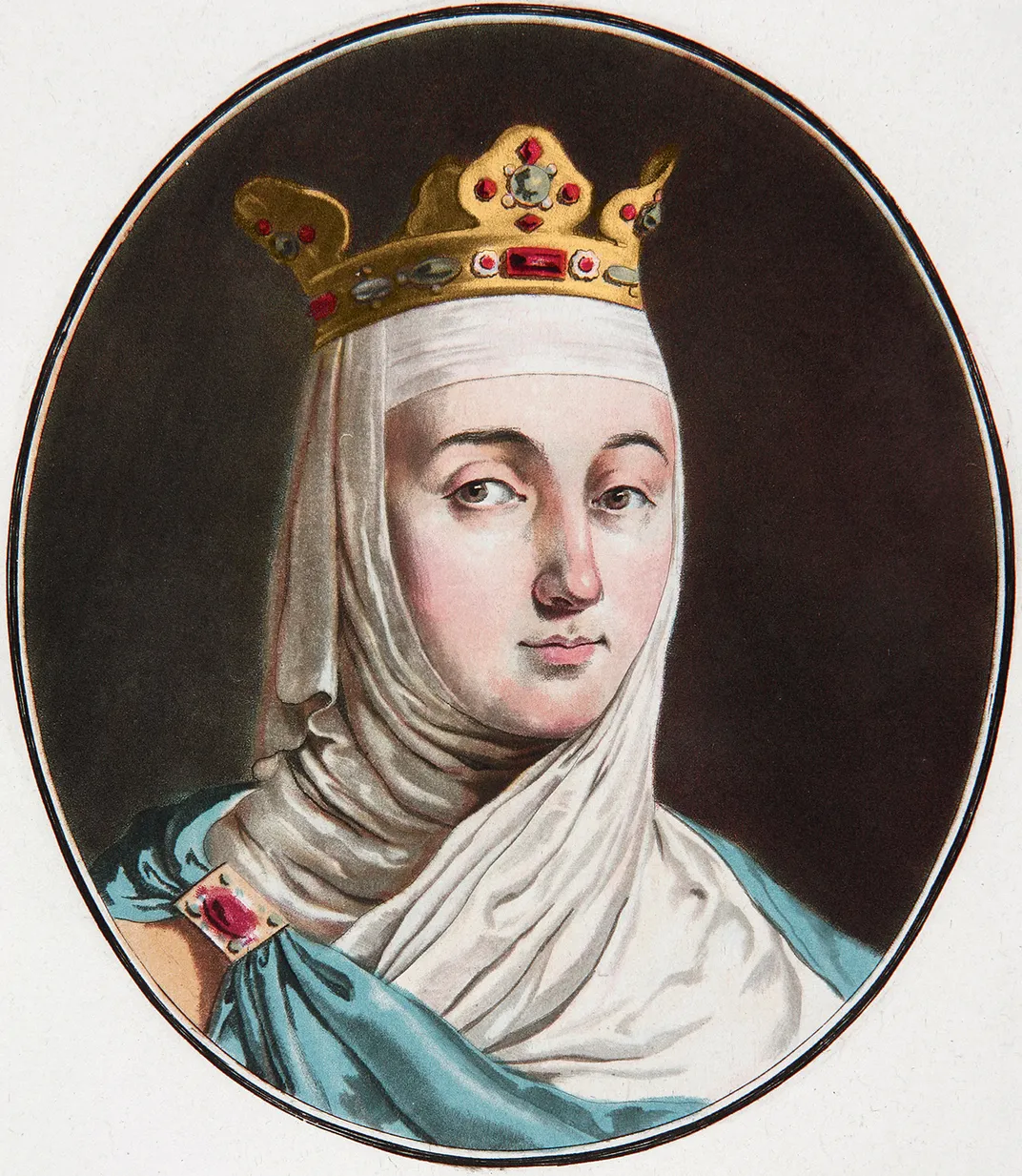
When popular imagination turns to the medieval rulers of England, it conjures a gallery of iron-willed kings: William the Conqueror redrawing the political landscape of Europe, Richard the Lionheart riding across the sands of Outremer, or Henry V rallying his troops at Agincourt. When women enter the narrative, they are frequently cast in rigid archetypes—either passive conduits of royal lineage or demonized dynastic schemers like the “She-Wolf of France,” Isabella of France.
Yet English medieval history was not forged by kings alone. Behind the stone ramparts and battlefield banners stood queens consort and dowagers whose statesmanship, diplomatic acumen, and financial patronage laid the very foundations of the English state. Far from ornamental dynastic pawns, these women governed in the absence of their husbands, brokered truces that averted catastrophic civil wars, and reshaped the social fabric of the realm. To recover their stories is to see English royal authority not as a patriarchal monolith, but as a complex machinery of power where queens operated at the center.
Emma of Normandy: The Architect of Anglo-Scandinavian Rule
Before the Norman Conquest transformed England in 1066, a woman of Norman blood had already mastered English royal politics. Emma of Normandy (c. 984–1052), daughter of Richard I, Duke of Normandy, arrived in England in 1002 to marry King Æthelred II, known to posterity as “the Unready.” This union was intended to cement an alliance against Viking raiders, but Emma proved to be far more than a diplomatic guarantee.
       [Emma of Normandy]
       /                 \
  Married (1002)     Married (1017)
      /                   \
[Æthelred II]          [Cnut the Great]
     |                         |
[Edward the Confessor]   [Harthacnut]
When Scandinavian forces led by Sweyn Forkbeard and his son Cnut overran England, Æthelred perished, leaving an embattled kingdom. Rather than retreating into an obscure continental widowhood, Emma made an extraordinary political gamble: she married Cnut, the conqueror of her first husband’s kingdom. By doing so, she legitimized the new Anglo-Danish dynasty while securing political survival for herself and inheritance rights for her offspring.
Emma was no silent partner in Cnut’s vast North Sea Empire. Royal charters from the period show her named alongside the king as an active co-ruler, issuing decrees and granting land. Following Cnut’s death, she ruthlessly managed the factional warfare that ensued, securing the succession of her son Harthacnut and later the elevation of her son by Æthelred, Edward the Confessor. Crucially, Emma commissioned the Encomium Emmae Reginae, one of the earliest examples of targeted political propaganda in European history, specifically written to defend her political actions and promote her lineage. Through two marriages and the reigns of two sons, Emma bridged the Anglo-Saxon and Scandinavian worlds, fundamentally shaping the dynastic landscape that culminated in 1066.
Matilda of Scotland: The Administrative Heart of the Anglo-Norman State
When Henry I took the throne in 1100, following the mysterious hunting death of his brother William Rufus, he ruled a kingdom simmering with hostility between the native Anglo-Saxon population and the Anglo-Norman elite. His marriage to Edith of Scotland—rechristened Matilda upon her coronation—was a masterstroke of political reconciliation.
Through her mother, Saint Margaret of Scotland, Matilda carried the bloodline of the ancient House of Wessex, being the direct descendant of Edmund Ironside. Her marriage to the Norman king unified the conquered and the conquerors, giving Henry’s crown a domestic legitimacy it desperately lacked.
Matilda’s contributions extended far beyond symbolic genealogy. Henry I spent vast portions of his reign on the continent defending his territories in Normandy; during these extended absences, Matilda served as regent of England. She sat on the royal council, issued authoritative writs in her own name, and oversaw the machinery of English law. Contemporary chroniclers praised her legal prudence and financial management.
Beyond governance, Matilda was an energetic patron of architectural and infrastructural projects. She financed the construction of the Bow Bridge over the River Lea—England’s first stone-arched bridge—which dramatically improved commerce and travel along the vital London-to-Essex corridor. A deeply cultured woman who corresponded with intellectuals across Europe and financed public bathhouses and leper hospitals, Matilda proved that administrative competence and civic investment were just as vital to the survival of the realm as martial campaigns.
Eleanor of Provence: Political Strategy and the Westminster Legacy
Often overshadowed by her famous predecessor, Eleanor of Aquitaine, Eleanor of Provence (c. 1223–1291), wife of Henry III, was one of the most politically formidable women of the thirteenth century. Arriving from southern France as a young bride, Eleanor quickly recognized the vulnerabilities of Henry’s crown, which was perennially challenged by fractious barons led by Simon de Montfort.
When Henry III traveled to Gascony in 1253, he formally appointed Eleanor as regent, assisted by his brother Richard of Cornwall. Rather than serving as a figurehead, Eleanor managed the kingdom during a period of acute crisis, successfully convening parliaments and securing military supplies for the king’s campaigns abroad.
During the Second Barons’ War, when Henry and their son Prince Edward (later Edward I) were captured at the Battle of Lewes in 1264, Eleanor did not despair. Operating from exile in France, she mortgaged her estates, raised international loans, and assembled a substantial mercenary army and fleet along the Flemish coast. While bad weather prevented the fleet from sailing, her relentless diplomatic pressure split the baronial coalition and provided essential financial backing that enabled Prince Edward to escape, defeat Simon de Montfort at Evesham, and reclaim the royal authority.
Eleanor was also an influential patron of religious and intellectual institutions. She played an instrumental role in the reconstruction of Westminster Abbey into the Gothic masterpiece standing today, embedding French architectural traditions into the visual vocabulary of English power.
Philippa of Hainault: Commerce, Chivalry, and Compassion
The reign of Edward III is traditionally remembered for the outbreak of the Hundred Years’ War and the founding of the Order of the Garter. Yet the domestic stability and economic prosperity that financed these martial endeavors owed a profound debt to Queen Philippa of Hainault (1314–1369).
Philippa was an astute economic reformer. Recognizing that England was exporting raw wool to Flanders only to import expensive finished textiles, she actively encouraged Flemish weavers and cloth workers to settle in Norwich and the West Riding of Yorkshire. This direct intervention jump-started the domestic English wool manufacturing trade, transforming raw wool production into an industrialized export economy that generated unprecedented revenues for the royal exchequer.
On the home front, Philippa stepped into military command when necessary. While Edward III campaigned in northern France, King David II of Scotland invaded northern England in 1346. Philippa traveled to Newcastle, rallied English defensive forces, and oversaw preparations that culminated in the decisive English victory at the Battle of Neville’s Cross, where the Scottish king was captured.
Yet her most enduring mark on medieval statecraft was her understanding of chivalric politics. During the Siege of Calais in 1347, when Edward III intended to execute six prominent burghers who had surrendered the keys of the city, Philippa famously knelt before the king, pleading for their lives on behalf of mercy and christian honor. By publicly tempering her husband’s martial wrath, Philippa allowed the king to preserve his fearsome reputation without incurring the moral opprobrium of slaughtering unarmed hostages.
The Foundations of English Governance
The story of the English monarchy cannot be understood without the women who wore the crown consort. Emma of Normandy forged an institutional bridge between Viking and Saxon worlds; Matilda of Scotland institutionalized administrative regency and ethnic reconciliation; Eleanor of Provence deployed international diplomacy to rescue the crown from baronial collapse; and Philippa of Hainault catalyzed an industrial revolution while managing the home front during total war.
These medieval queens navigated a patriarchal society not by surrendering to its limitations, but by wielding diplomacy, finance, dynastic networking, and regency to carve out enduring executive power. Their legacies were not footnotes to history; they were the architectural pillars upon which medieval England was built.
About The Author