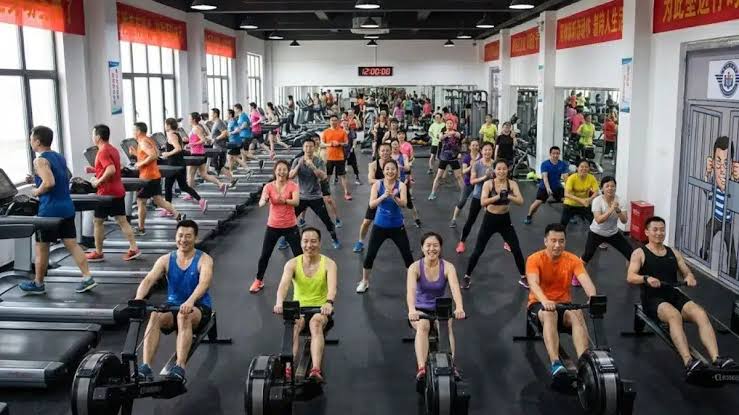
Behind high concrete perimeters, iron gates, and security turnstiles on the industrial outskirts of major Chinese cities, hundreds of men and women line up at dawn. They are not serving criminal sentences, yet their daily movement is heavily restricted, their luggage has been searched for contraband, and their meals are strictly measured by overseers.
Known colloquially on Chinese social media platforms like Xiaohongshu and Douyin as “fat loss prisons” (减肥集中营 or jianfei jizhongying), these residential boot camps have surged into a booming subculture. Promising rapid, drastic transformations in as little as 28 days, these facilities cater to an increasingly desperate public caught between two conflicting realities: the rapid rise of an obesity epidemic and an uncompromising societal standard of extreme thinness.
The Reality of Daily Life Inside
Despite the sensational moniker, these centers are entirely voluntary and privately operated, typically costing between $600 and $1,500 per month for shared dormitory lodging, meals, and relentless training. However, once an enrollee steps inside and signs their contract, personal autonomy is largely relinquished.
A typical day follows a quasi-military structure:
- 07:30 – 08:00: Wake-up calls and the mandatory morning weigh-in. Weight numbers are logged and often displayed on shared tracking boards, introducing immediate social pressure.
- 09:00 – 11:00: The first workout block, focusing on high-volume cardiovascular output—endurance aerobics, stair runs, or synchronized calisthenics.
- 11:15: The primary morning meal. Forget luxury retreat fare; meals are served on stainless steel cafeteria trays. A typical plate consists of boiled eggs, steamed cucumber, plain tomatoes, and minimal complex carbohydrates, strictly seasoned without excess oil, sugar, or sodium.
- 14:00 – 17:00: Resistance training, machine circuits, and high-intensity interval training (HIIT) designed to deplete glycogen reserves.
- 18:30 – 20:00: Mass spin cycling sessions under pulsating neon lights, accompanied by thumping EDM, pushing exhausted trainees through high-cadence intervals.
- 21:00: Evening weigh-in, luggage checks for secret food delivery deliveries, and strict lights-out curfews.
Leaving the premises during the contracted month is forbidden without a verified emergency. Outside food deliveries are intercepted at the security gate. By stripping away everyday temptations—food apps, sedentary office chairs, social drinking, and snacking—the camp manufactures an artificial environment where compliance is the only path forward.
The Cultural and Economic Engine
The popularity of these intensive camps stems from deep structural forces in contemporary Chinese society.
Over the past four decades, rapid urbanization, rising disposable incomes, and the expansion of cheap, calorie-dense convenience foods transformed the national diet. Concurrently, intense work cultures—such as the infamous “996” schedule (9 a.m. to 9 p.m., six days a week)—engendered a largely sedentary urban population with high chronic stress. Official public health data indicates that over 50% of adults in China are now classified as overweight or obese, prompting national health authorities to launch wide-scale weight management campaigns.
Yet, while public weight is trending upward, aesthetic pressure has intensified in the opposite direction. Online beauty standards celebrate frail silhouettes—epitomized by viral challenges like testing waistlines against the width of an A4 sheet of paper or balancing coins in the hollow of a collarbone.
For young professionals, college graduates entering a hyper-competitive job market, and singles navigating the marriage pool, physical appearance carries palpable social and economic capital. When traditional gym memberships fail amid exhaustion and long working hours, people increasingly view residential “prisons” as an aggressive external hard reset.
The Medical and Psychological Cost
While social media feeds showcase dramatic transformations—trainees dropping 5 to 10 kilograms within a single month—medical professionals and nutritionists express profound concern over the physiological toll of these boot camps.
- Orthopedic Strain and Overtraining: Many participants arrive with high body mass indexes and little prior conditioning. Subjecting unconditioned joints to four to eight hours of repetitive, high-impact exercise daily invites severe tendonitis, cartilage degradation, stress fractures, and joint inflammation.
- Metabolic Adaptation and Muscle Wasting: Severe caloric deficits paired with extreme cardiovascular exercise force the human body into an energy conservation state. Without sufficient protein and gradual progression, a significant proportion of the weight lost is water and lean muscle mass rather than visceral fat. When lean muscle drops, basal metabolic rate plummets.
- The Rebound Phenomenon: The central flaw of any enclosed camp model is its total disconnection from real life. Inside, discipline is outsourced to an overseer. Once participants return to their regular jobs, social engagements, and food delivery environments, hormonal drivers like ghrelin (the hunger hormone) skyrocket. Lacking sustainable coping mechanisms, an overwhelming majority experience rapid weight regain, often surpassing their starting weight.
- Disordered Relationship with Food: Daily public weigh-ins, luggage inspections, and binary framing of food as “sin” or “fuel” exacerbate anxiety and shame. In extreme cases across the broader unregulated industry, severe complications—including rhabdomyolysis and acute kidney failure—have sparked calls for tighter government oversight and licensing.
The Human Dilemma: Willpower vs. Environment
China’s “fat loss prisons” are less a fitness revolution than a mirror reflecting modern anxieties. They monetize the widespread feeling of personal powerlessness in the face of modern living. Many participants openly state that they know the conditions resemble incarceration, but they see no other way to escape the algorithmic loops of desk jobs, burnout, and emotional eating.
Externalizing discipline by handing the keys to a trainer behind a locked gate can produce quick, measurable results on a scale. But human biology cannot be bullied indefinitely. Real metabolic health is rarely forged through thirty days of self-punishment; it is built on gentle, unglamorous habits that can survive outside the prison walls.
About The Author