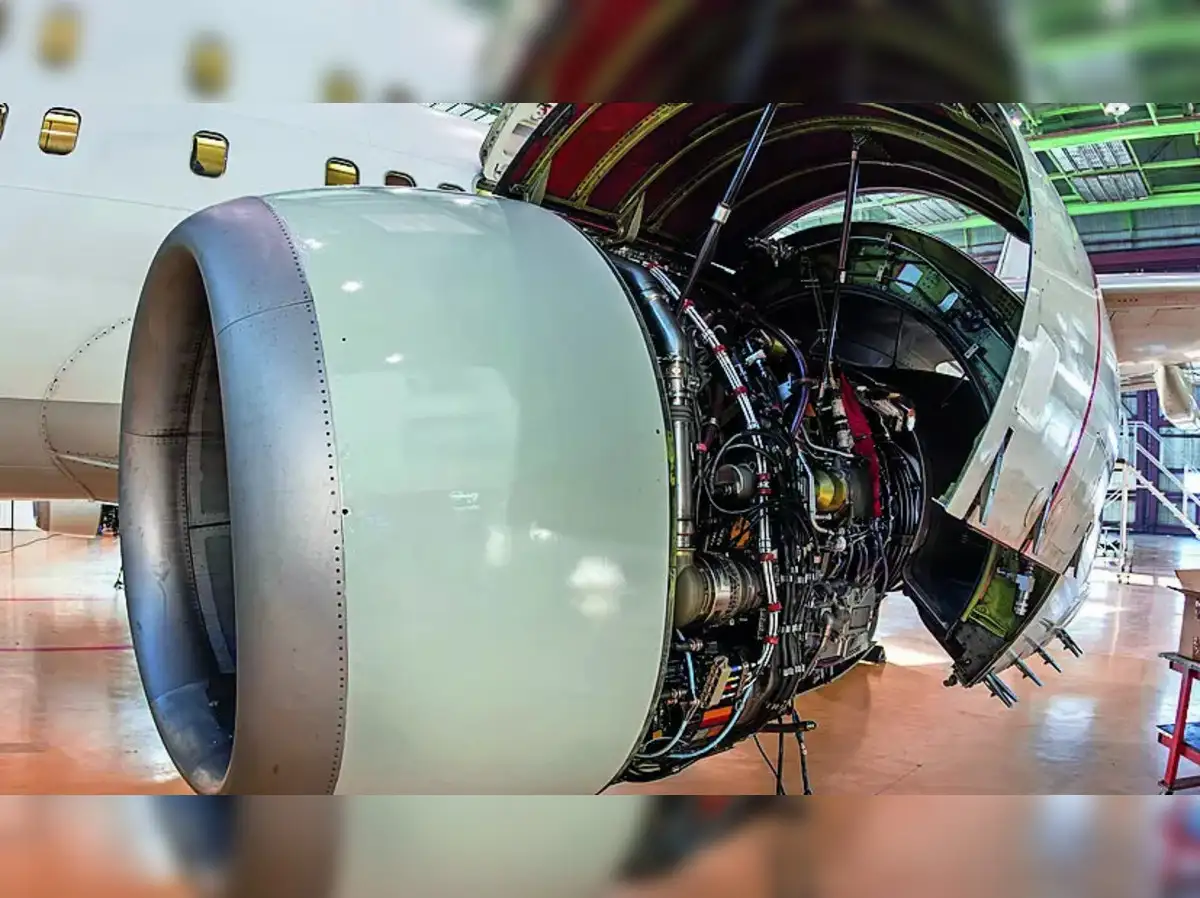
For decades, military aviation analysts have repeated a hard truth of aerospace engineering: building a supersonic fighter jet airframe is challenging, but mastering military jet propulsion is one of the most difficult engineering feats on the planet. While dozens of nations build satellites, launch rockets into orbit, or assemble combat airframes, only four nations—the United States, Russia, the United Kingdom, and France—possess the end-to-end metallurgical, thermodynamic, and manufacturing mastery required to design and build high-thrust military turbofan engines from scratch. China has poured tens of billions of dollars over several decades to bridge that gap with its WS-10 and WS-15 engines.
Now, under the direct stewardship of the Prime Minister, India has initiated a high-priority, multi-pronged campaign to break through this technological barrier. By pushing strategic co-development, deep technology transfer, and revamping domestic research institutes, the government aims to secure India’s seat in the exclusive club of military jet engine manufacturers.
The Crucial Missing Piece in Aerospace Sovereignty
India’s journey toward defence indigenisation has yielded impressive milestones: ballistic missile shields, nuclear-powered ballistic missile submarines, indigenous aircraft carriers, and the Tejas Light Combat Aircraft (LCA). Yet, beneath the Tejas’s carbon-composite skin beats an imported heart—the General Electric F404 engine.
The vulnerability of relying on foreign propulsion was exposed during the 1998 Pokhran-II sanctions, when testing components and international support were abruptly frozen. Furthermore, relying on foreign original equipment manufacturers (OEMs) leaves India exposed to supply chain bottlenecks, sovereign export vetoes, and unpredictable geopolitical shifts.
The Gas Turbine Research Establishment (GTRE) under the Defence Research and Development Organisation (DRDO) spent over three decades attempting to overcome this through the indigenous GTX-35VS Kaveri engine. While Kaveri achieved valuable milestones in testing, it struggled with weight limits, hot-section turbine metallurgy, and thrust generation. Falling short of the required dry and afterburning thrust needed for the operational Tejas, Kaveri was eventually decoupled from the front-line fighter fleet, relegated to drone applications and technology demonstration.
Recognizing that fighter jet independence is incomplete without domestic propulsion, the Prime Minister has elevated engine manufacturing to a mission of national security and strategic autonomy.
The Physics of the Challenge: Why Jet Engines Are So Hard
Jet engine manufacturing represents the absolute pinnacle of materials science. Inside the high-pressure turbine of a modern fighter engine:
- Temperatures exceed 1,600°C to 1,800°C—several hundred degrees hotter than the melting point of nickel alloys.
- Turbine blades rotate at tens of thousands of revolutions per minute, experiencing centrifugal forces equivalent to hanging several mid-sized cars from a single miniature blade.
- The tolerances required are measured in microns, requiring single-crystal superalloys, advanced ceramic thermal barrier coatings, laser powder bed fusion, and serpentine internal cooling channels.
A country cannot simply reverse-engineer these components with standard precision tooling. It demands an entire industrial ecosystem: specialized metallurgy laboratories, advanced foundry facilities, precision balance testing benches, and full-authority digital engine control (FADEC) software. Because no global power willingly parts with this sovereign intellectual property, overcoming this gap requires a deliberate mix of high-stakes diplomacy and strategic industrial partnerships.
A Multi-Track Roadmap to Propulsion Power
The current strategy does not rely on a single breakthrough. Instead, it deploys a diversified three-track approach designed to equip current platforms while concurrently securing intellectual property for future fifth- and sixth-generation fighters.
                 INDIA'S THREE-TRACK ENGINE ROADMAP
  ┌─────────────────────────────────────────────────────────────┐
  │                                                             │
  │  Track 1: GE F414 Licensing (HAL Partnership)               │
  │  • 80% Technology Transfer for Tejas Mk2                    │
  │  • Machining, blisk fabrication & thermal coatings          │
  │                                                             │
  │  Track 2: Joint Development with Safran (France)            │
  │  • Clean-sheet 110–120 kN powerplant for AMCA Mk2           │
  │  • Shared IP & joint global export rights                   │
  │                                                             │
  │  Track 3: Domestic Revival (GTRE Kaveri Upgrades)           │
  │  • Scaled testing up to 80 kN target                        │
  │  • Powers Ghatak UCAV and uncrewed combat systems           │
  │                                                             │
  └─────────────────────────────────────────────────────────────┘
1. The Indo-US GE F414 Co-Production
The landmark agreement between Hindustan Aeronautics Limited (HAL) and General Electric (GE Aerospace) to co-produce the F414-INS6 engine in India marks a major leap in domestic precision manufacturing. With an unprecedented ~80% technology transfer, Indian engineers are gaining operational access to:
- Single-crystal turbine blade machining.
- Advanced ceramic matrix composites and thermal barrier coatings.
- Monolithic blisk (bladed disk) production and electronic engine management.
This engine will power the upcoming LCA Tejas Mk2 Medium Weight Fighter and early prototypes of the Advanced Medium Combat Aircraft (AMCA). Beyond securing engines for near-term squadrons, the venture establishes modern aerospace production lines directly on Indian soil.
2. The Strategic Alliance with Safran for AMCA Mk2
While the GE partnership provides licensed manufacturing capabilities, full strategic autonomy requires independent intellectual property rights (IPR). Under direct high-level negotiations, India has engaged France’s Safran to co-design and co-develop a clean-sheet 110–120 kN thrust turbofan engine specifically tailored for the fifth-generation stealth AMCA Mk2.
Unlike conventional licensed assembly, this partnership focuses on joint development with complete transfer of technology, joint ownership of intellectual property, and unrestricted export authority. This guarantees that future Indian stealth fighters will operate without third-party end-user restrictions.
3. Re-engineering the Kaveri Architecture
Simultaneously, the lessons learned over decades by GTRE are being channeled into a revived Kaveri test program. Upgraded to target higher thrust benchmarks, Kaveri derivatives are being matured to power India’s autonomous stealth combat drones, such as the Ghatak Unmanned Combat Aerial Vehicle (UCAV). This ensures that decades of indigenous research are capitalized upon rather than abandoned.
Overcoming Structural and Institutional Hurdles
Transitioning from assembling kit-based assemblies to mastering core thermal design requires a fundamental overhaul of India’s domestic defence-industrial ecosystem.
Historically, projects suffered from rigid public-sector monopolies, fragmented communication between research labs and operational aircrews, and slow administrative clearances. Under current leadership, these bottlenecks are being actively addressed:
- Private Sector Integration: Private Indian aerospace manufacturers and precision engineering firms are being embedded into tier-1 and tier-2 supply chains for forgings, castings, and sub-assemblies.
- Dedicated R&D Budgets: Capital outlays have been earmarked specifically for testing infrastructure, specialized wind tunnels, and high-altitude test cells, reducing reliance on foreign flight-test beds.
- Executive Accountability: Mission-mode timelines are closely monitored from the highest levels of the Prime Minister’s Office (PMO) to align project milestones with the Indian Air Force’s squadron drawdown timelines.
The Geopolitical and Economic Dividend
Joining the elite club of aero-engine manufacturers will reshape India’s standing on the global stage:
- Geopolitical Independence: Complete ownership of propulsion technology frees India’s diplomatic policy from foreign leverage during regional crises.
- Defence Exports: As the Global South seeks cost-effective, high-performance combat aircraft without restrictive political conditions, an indigenous Indian engine enables unrestricted export of complete weapon platforms like the Tejas and AMCA.
- Civil Aviation Spillover: The high-temperature metallurgy and materials expertise gained from military turbofans will directly benefit India’s growing civilian aerospace sector, paving the way for regional passenger jet powerplants.
By tackling the hardest problem in aerospace head-on, India’s drive for engine sovereignty marks the decisive transition from an equipment importer to an aerospace superpower.
About The Author